Acne keeps coming back: what might your routine miss?


Recurring breakouts do not always mean you need more products. Here is how to review maintenance, irritation, triggers and diagnosis with a dermatologist.
Book a consultation
When acne keeps coming back, it can feel as if every new product has failed. Often, the missing piece is not a stronger product but a routine that treats acne-prone areas consistently, protects the skin barrier and continues after active spots settle. A review also needs to ask whether the bumps are truly acne and whether hormones, medicines or hair and skin products are contributing.
Why acne keeps coming back
An acne spot becomes visible after changes have already started inside the follicle. This is why treating only the pimple you can see may not prevent the next one. Applying a clinician-advised topical treatment across the acne-prone area, rather than as an occasional spot fix, can be important.
Stopping the plan the moment the skin looks calmer is another common gap. NICE guidance recognises acne as a condition that may relapse and advises considering maintenance for people with frequent recurrences. Maintenance is individual: some people need only gentle skin care, while others may need a topical medicine selected around sensitivity, pregnancy plans and previous response.
Could your recurring acne routine be too harsh?
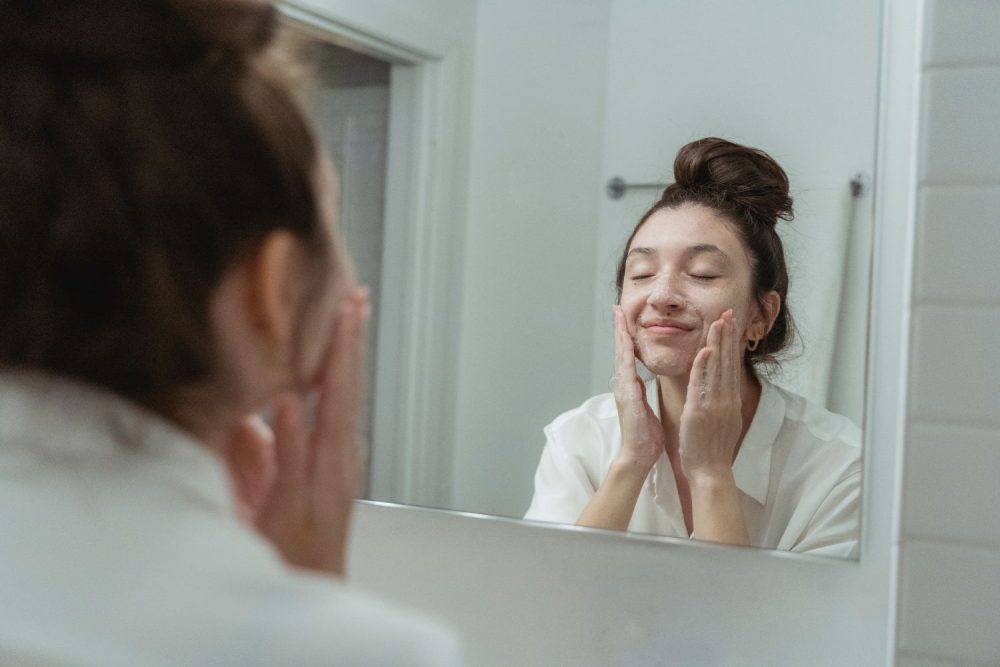
More cleansing is not always better. Scrubs, brushes, strong toners, frequent exfoliating acids and repeated washing can irritate the barrier. That irritation can produce redness, stinging and more noticeable breakouts. A gentle, pH-appropriate cleanser used up to twice daily and after heavy sweating is a more measured starting point.
Use lukewarm water and fingertips, then pat dry. A non-comedogenic moisturiser and sunscreen can support comfort, especially when acne medicines cause dryness. Introduce changes one at a time; switching several products every week makes it hard to know what is helping or irritating.
Also check what touches the skin. Hair oils, pomades, leave-in conditioners, heavy makeup, helmets, tight straps and a phone against the cheek can matter in the pattern they contact. Choose products labelled non-comedogenic where possible, remove makeup before bed and avoid picking, which can increase the chance of dark marks and scars.
Acne maintenance treatment needs time
Most first-line acne plans are reviewed at around 12 weeks, not after a few days. Improvement may be gradual, and early dryness or irritation may require adjustment rather than abandoning the plan. The 2024 American Academy of Dermatology guideline strongly supports several established options, including benzoyl peroxide and topical retinoids, but the right combination depends on acne type, severity and medical history.
Antibiotics also need a plan. Guidance advises limiting their duration and avoiding approaches that encourage antimicrobial resistance. If an antibiotic is used, the rest of the routine and the step-down plan matter.
A simple weekly photo in the same light can be more useful than checking the mirror several times a day. Track new inflamed spots, menstrual timing, shaving, workouts, hair products and any recent medicine or supplement change. Bring that record to your appointment instead of adding more actives on your own.
When acne keeps coming back, check the diagnosis
Not every acne-like bump is acne vulgaris. Folliculitis, rosacea and perioral dermatitis can look similar but need different care. Clues such as intense itching, identical-looking bumps, persistent central facial redness or a rash clustered around the mouth deserve an examination.
Adult acne with irregular periods, increased facial hair or scalp hair thinning may justify an assessment for androgen excess or polycystic ovary syndrome. That does not mean every jawline breakout needs hormone testing. A Medical Council registered dermatologist can decide whether the pattern and history support further evaluation.
Painful nodules, new scars, persistent dark marks or significant distress are reasons to seek help early. These features can change the urgency and the treatment pathway.
Choosing acne treatment in Chennai
If you are searching for acne treatment in Chennai, an acne dermatologist in Anna Nagar or an acne clinic in Mogappair, look beyond before-and-after promises. A useful consultation documents the type and distribution of lesions, every product and medicine being used, previous treatment duration, menstrual or shaving patterns and the effect on confidence.
People often type “best acne clinic in Chennai,” but search position is not proof of clinical fit. At The Derm Edit, Dr. Sarat Anandh, MD DVL, builds a doctor-led plan around diagnosis, skin tolerance and follow-up, with attention to post-acne pigmentation common in Indian skin.
Recurring acne deserves a calm review, not another crowded shelf. Bring your current products and a short timeline so we can identify what to keep, stop or discuss. Message us on WhatsApp for details.
Questions we are asked
Why does acne return after I stop treatment?
Visible spots may settle before the tendency to form new blocked follicles does. If breakouts return often, ask your dermatologist whether a maintenance plan is appropriate rather than restarting products at random.
Can washing my face more often stop recurring acne?
Usually not. Frequent washing, scrubbing and strong cleansers can irritate the skin, so a gentle cleanser up to twice daily and after heavy sweating is generally a better routine.
Should I treat only each pimple or the whole acne-prone area?
Acne changes begin before every spot is visible, so many clinician-advised topical plans are applied across the acne-prone area. The exact product, amount and frequency should match your skin tolerance and medical history.
When should recurring acne be checked by a dermatologist?
Seek a review if acne is painful, scarring, leaving persistent dark marks, affecting confidence or not improving after a complete, consistent plan. Also get checked if the bumps itch, all look alike or sit around the mouth, because another condition may resemble acne.
How do I choose the best acne clinic in Chennai for me?
Look for diagnosis-led care, a Medical Council registered dermatologist, clear follow-up and a plan that reviews every current product and medicine. Search rankings and promises cannot show whether a clinic is the right clinical fit for your skin.
Sources & further reading
- National Institute for Health and Care Excellence — Acne vulgaris: management (NG198), 2021; updated 30 April 2026 https://www.nice.org.uk/guidance/ng198
- Reynolds RV et al. — Guidelines of care for the management of acne vulgaris, 2024 https://pubmed.ncbi.nlm.nih.gov/38300170/
- Geng R, Sibbald RG — Acne Vulgaris: Clinical Aspects and Treatments, 2024 https://pubmed.ncbi.nlm.nih.gov/38241449/
- Sardana K et al. — An updated clinico-investigative approach to cutaneous hyperandrogenism in adult female acne, 2024 https://pubmed.ncbi.nlm.nih.gov/38205927/
- American Academy of Dermatology — Acne: Tips for managing, reviewed 2022 https://www.aad.org/public/diseases/acne/skin-care/tips