Creatine during weight loss: can it help protect muscle?

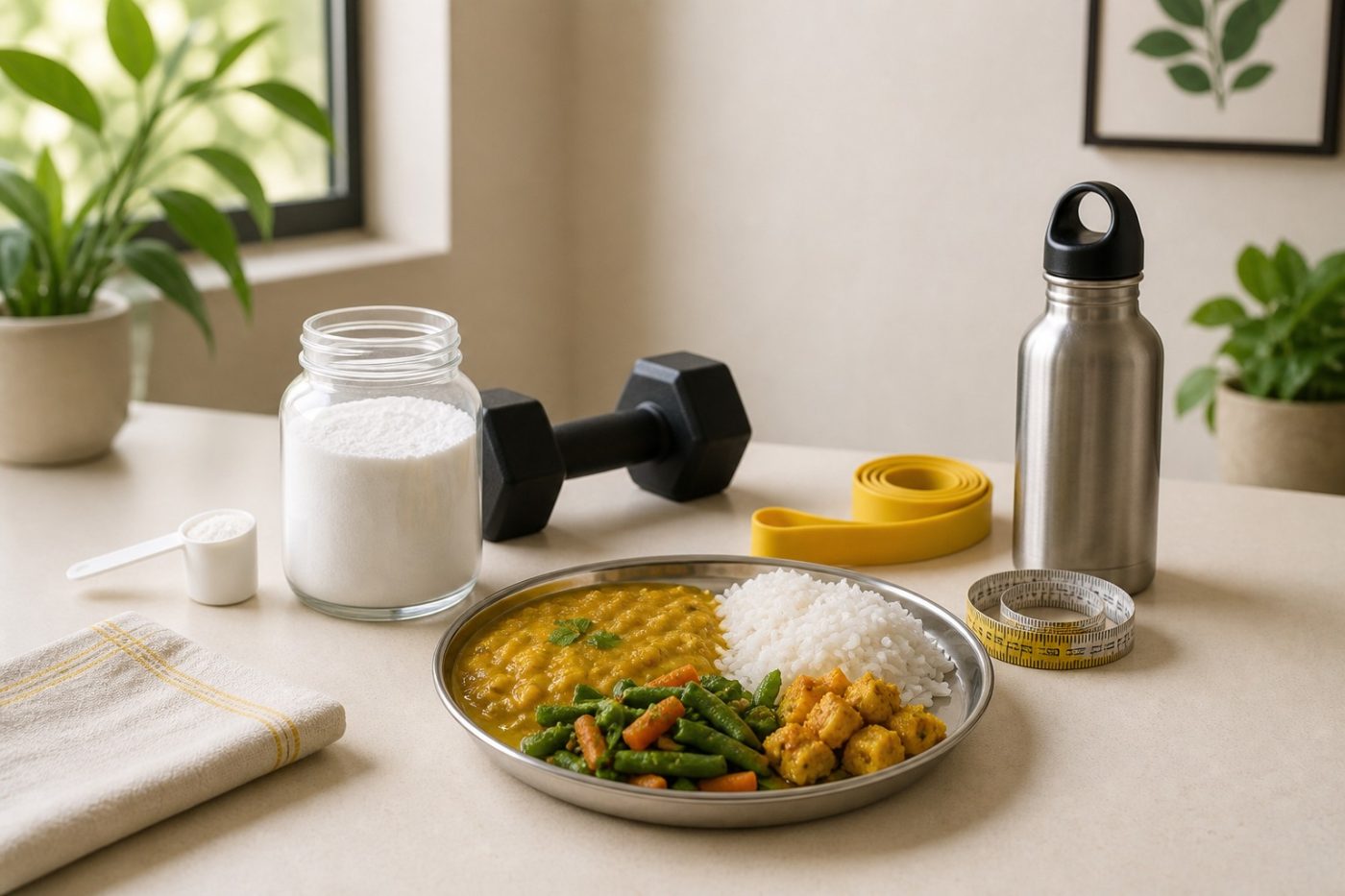
Creatine may support muscle when it is paired with resistance training, but it is not a shortcut for fat loss. Here is what newer research means for a doctor-led plan.
Book a consultation
Creatine during weight loss is being discussed because a smaller number on the scale is not the only goal. When weight falls, some fat-free mass can fall with it. That makes strength training, enough protein and sensible monitoring important. Creatine may support this work for some adults, but it is not a fat-loss medicine and it does not make an incomplete plan complete.
Why muscle preservation during weight loss matters
Muscle helps you move, train and manage everyday tasks. A 2026 systematic review of people who lost at least 10% of body weight found that fat-free mass fell across diet, incretin-medicine and surgical approaches. The studies were quite different, so the percentages should not be applied to every patient, but the review's practical message was consistent: exercise belongs in weight-loss care.
Resistance exercise has the clearest direct role. A separate 2025 meta-analysis found that adding resistance exercise to dietary weight loss helped reduce the loss of fat-free mass and improved strength, even when total body-weight change was similar.
What creatine during weight loss can - and cannot - do
Creatine helps muscles rapidly recycle energy during short, hard efforts. That can support the quality of resistance training. The form with the longest research history is creatine monohydrate.
In a 2024 meta-analysis of 12 studies in adults younger than 50, creatine plus resistance training produced about 1.14 kg more lean body mass than resistance training alone. Small average changes in body-fat measures were also reported. However, these were training studies, not proof that creatine by itself causes weight loss or that every person will respond in the same way.
New 2026 evidence in postmenopausal women is encouraging but still modest. A pooled analysis found a small lean-mass advantage, around 0.37 kg, with creatine; the authors also noted limits in study number and certainty. This is an emerging support signal, not a reason to hand the same supplement plan to everyone.
Creatine for weight loss and the scale surprise
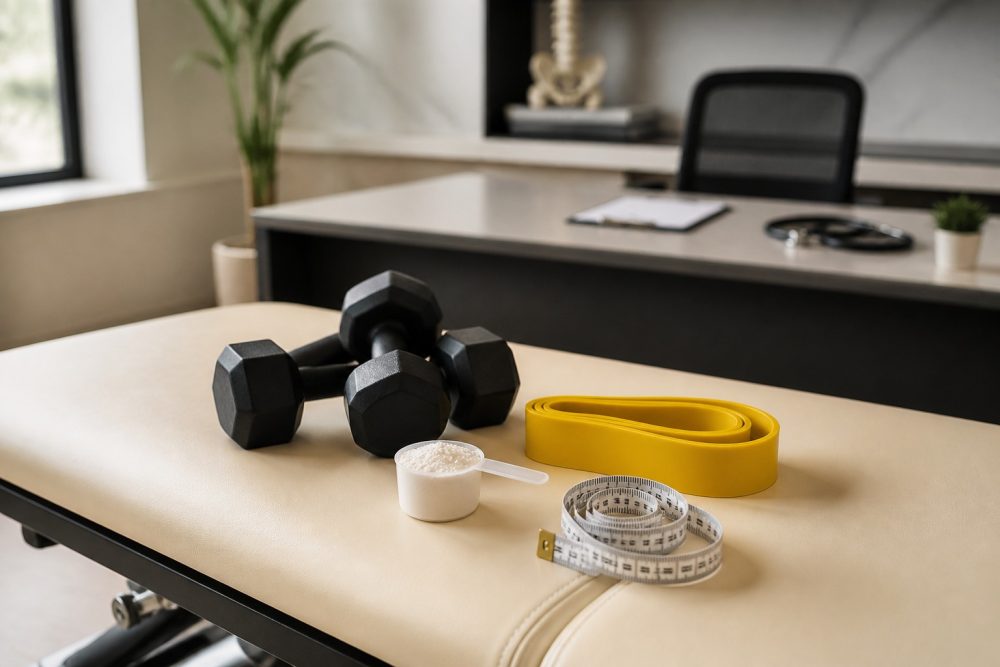
Some people see the scale rise soon after starting creatine, especially with a high-dose loading phase. This is usually linked to water held within muscle, not new body fat. A widely cited evidence review found that loading is not required; research commonly uses smaller daily amounts, but the right decision and dose should be discussed for the individual.
For this reason, a doctor-led weight-loss plan should not judge progress from one morning's weight. Waist measurements, strength, symptoms, food intake and, when appropriate, body-composition trends can give better context.
Is creatine monohydrate safe for everyone?
For healthy adults studied at usual research doses, the safety record is generally reassuring. A 2026 meta-analysis of randomised trials found no significant difference in estimated kidney filtration or urea, although serum creatinine rose. That matters because creatinine is also used in kidney blood tests; a rise may reflect creatine metabolism rather than kidney injury, but it still needs correct medical interpretation.
Speak to your clinician before using a supplement if you have known kidney disease, are pregnant or breastfeeding, take several medicines, or have an upcoming kidney test. Bring the product label to the appointment. Large single doses can also upset the stomach, and supplement quality is not identical across products.

Building a doctor-led weight loss plan in Chennai
At The Derm Edit, a Medical Council registered dermatologist can review your health history, medicines, food pattern, protein intake, activity and realistic goals before discussing supplements. Patients looking for doctor-led weight loss in Chennai, Anna Nagar or Mogappair should expect a plan that protects nutrition and function, not a list of powders.
If creatine fits, it should sit beside progressive resistance exercise, adequate protein, sleep and regular follow-up. If it does not fit, there are other ways to support muscle. The useful question is not “Is creatine good?” but “Does it add something safe and relevant to my plan?”
Want help building a muscle-aware weight-loss plan in Anna Nagar or Mogappair? The Derm Edit can review your goals, medicines, food pattern and training before discussing whether creatine belongs in your plan. Message us on WhatsApp for details.
Questions we are asked
Does creatine make you gain fat?
Creatine has not been shown to add body fat. It may increase scale weight through water held inside muscle, especially early on, so look at more than a single weigh-in.
Can I take creatine while using a GLP-1 weight-loss medicine?
Direct evidence for this exact combination is still limited. Ask the clinician managing your medicine to review kidney history, food intake, nausea, hydration and your strength-training plan before you add it.
Which type of creatine is most studied?
Creatine monohydrate has the longest and strongest research history. Extra marketing claims do not automatically make another form more useful, and product quality still matters.
Is creatine safe for the kidneys?
Recent trial reviews found no significant average change in estimated kidney filtration, but creatine can raise serum creatinine and complicate the interpretation of blood tests. People with kidney disease or other medical concerns should not self-start it without clinical advice.
How do I choose the best weight loss clinic in Chennai for muscle-preserving care?
Look for a qualified, Medical Council registered doctor who reviews your health, medicines, nutrition, strength and follow-up needs instead of making guarantees. A responsible clinic in Chennai, Anna Nagar or Mogappair should explain options, limits and monitoring clearly.
Sources & further reading
- Busk-Cirera L et al. - Effects of Incretin-Based Therapies, Diet and Exercise Interventions, and Bariatric Surgery on Fat-Free Mass in Adults With Overweight or Obesity, 2026 https://pubmed.ncbi.nlm.nih.gov/42324178/
- Naddafha S et al. - Creatine monohydrate for lean mass, strength, and bone density in postmenopausal women, 2026 https://pubmed.ncbi.nlm.nih.gov/42141930/
- Tsiaras A et al. - The effect of creatine supplementation on kidney function: a systematic review and meta-analysis of randomized controlled trials, 2026 https://pubmed.ncbi.nlm.nih.gov/42035842/
- Desai I et al. - The Effect of Creatine Supplementation on Resistance Training-Based Changes to Body Composition, 2024 https://pubmed.ncbi.nlm.nih.gov/39074168/
- Antonio J et al. - Common questions and misconceptions about creatine supplementation: what does the scientific evidence really show?, 2021 https://doi.org/10.1186/s12970-021-00412-w