Calorie deficit not working? Here is what your numbers miss

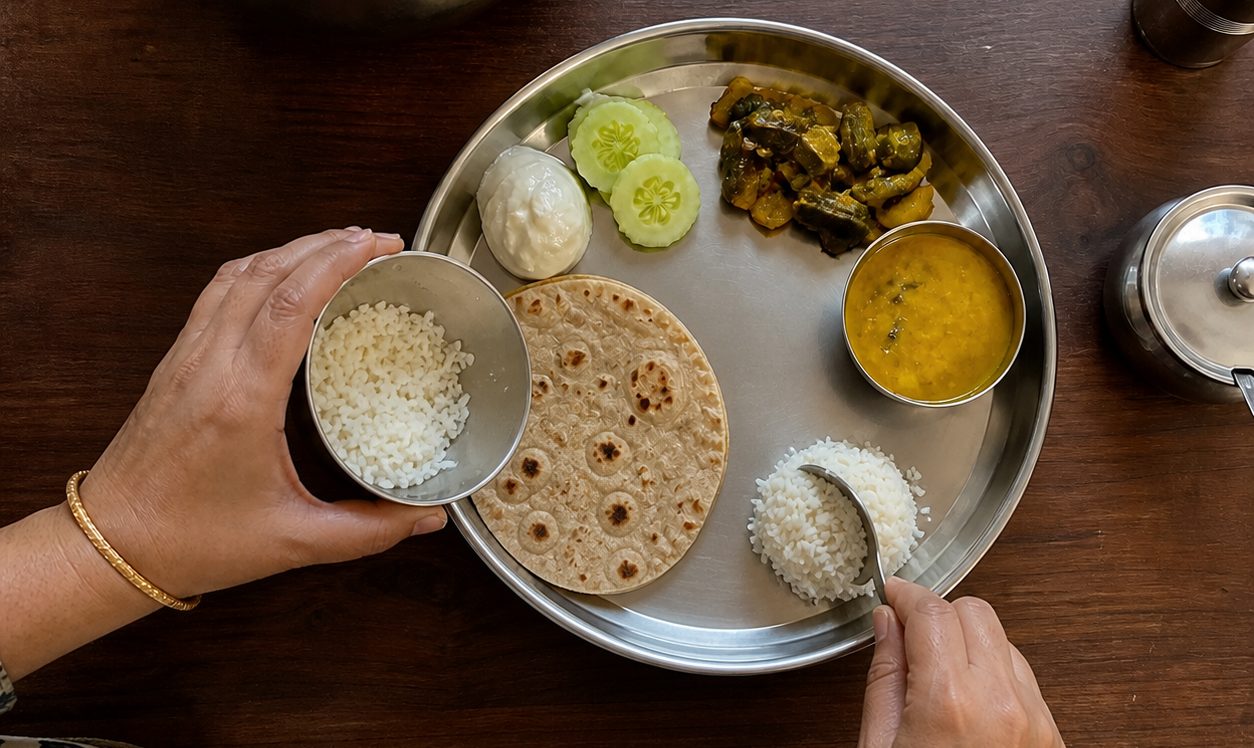
Calorie tracking does work — but the numbers most apps hand an Indian body are not the numbers that body is actually using. Here is what the research says, and how to track in a way you can hold on to.
Book a consultation
You have stopped rice at night. You have switched to brown bread. You are logging every meal on an app. Three weeks later the scale has not moved, and the same sentence starts playing in your head: my metabolism must be slow.
Almost always, it is not. When a calorie deficit is not working, the problem is usually arithmetic — and the arithmetic has three quiet problems in it.
Why your TDEE is lower than the calculator says
Your total daily energy expenditure, or TDEE, is everything your body spends in twenty-four hours. Roughly 60 to 70 per cent of it is your basal metabolic rate — the cost of simply being alive. About 10 per cent goes into digesting food. The rest is movement: your workout, but also walking, standing, housework, fidgeting.
Here is the part almost no TDEE calculator tells you. When the ICMR-NIN expert group reviewed the international equations used to predict BMR, they found those equations overestimate BMR in Indians by about 10 to 12 per cent, because the global dataset was built on younger, more muscular bodies, while Indian body composition carries relatively more fat and less muscle at the same weight. They also found Indians spend less energy on the same activity, so the sedentary activity factor was revised down from 1.53 to 1.40.
The effect is real money. A sedentary Indian reference man of 65 kg is estimated at around 2,110 kcal a day; a sedentary woman of 55 kg at around 1,660 kcal.
Procedures we offer
Fotona SP Dynamis NX, StarWalker MaQX, HydraFacial MD, Sylfirm X and more.
View procedures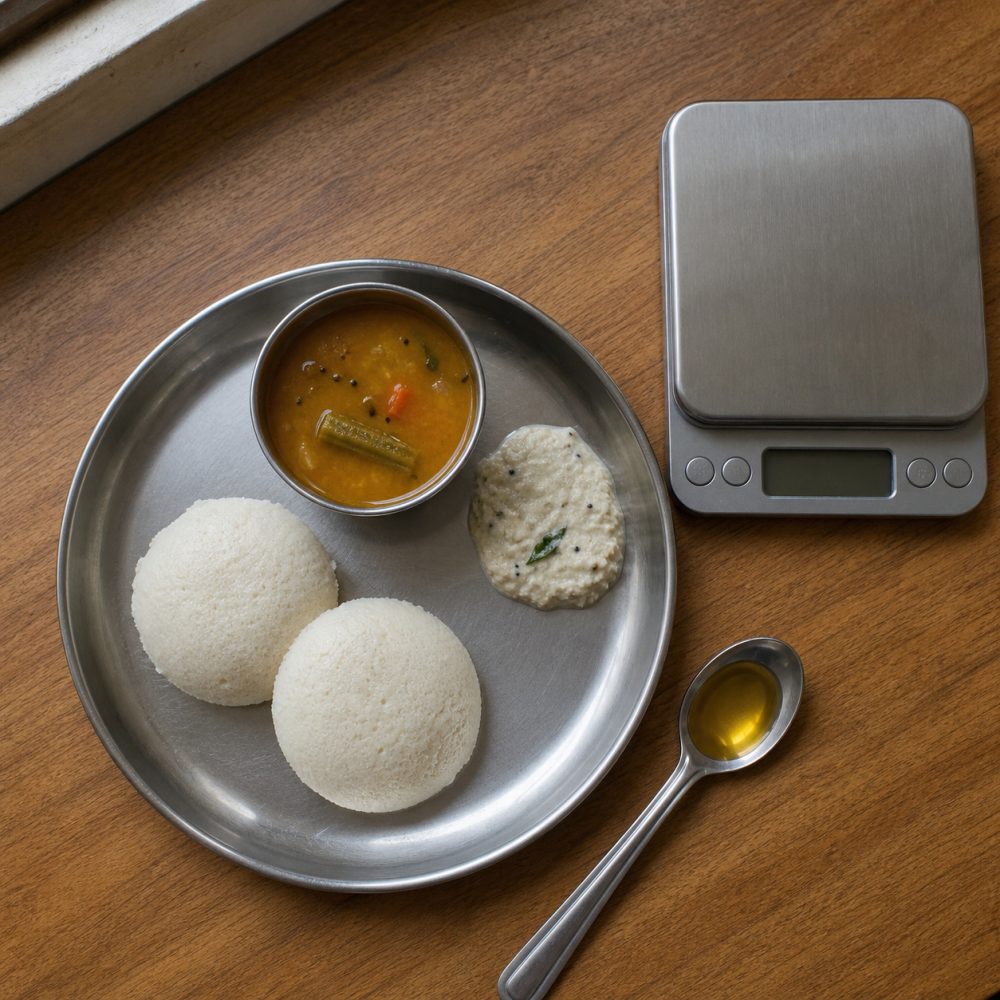
The gap between your plate and your calorie tracking app
In a landmark study of people who were certain they were eating very little and still not losing weight, researchers measured actual intake using the gold-standard method. Their metabolic tests came back normal. But they had underreported their food by around 47 per cent and overestimated their activity by around 51 per cent.
This was not dishonesty. It was memory, and oil, and the spoon of payasam at the neighbour's house, and the second dosa that never got logged. In Indian kitchens the biggest calorie tracking blind spot is cooking oil and gravy — invisible, calorie-dense, and almost never weighed.
The plan we would follow
Structured care over a year, built around your diagnosis.
See Edit PlansA calorie deficit does not run in a straight line
The old idea that 3,500 calories equals half a kilo, every week, forever, has been shown to significantly overestimate real weight loss. As you get lighter you carry less tissue, so you burn less doing the same things. Your body also quietly reduces spontaneous movement. The deficit you started with shrinks under you.
This is why plateaus are physiology, not failure — and why a moderate, liveable calorie deficit tends to outperform a dramatic one. Very low calorie targets are not something to attempt without medical supervision.
Fat-free mass: the number that decides how you look
Fat-free mass is everything that is not fat: muscle, bone, organs, water. Muscle is metabolically active tissue, so losing it lowers your burn and makes the next phase harder. A meaningful share of the weight lost during dieting can come from fat-free mass if nothing is done to protect it — that is the "smaller but softer" result people describe with disappointment.
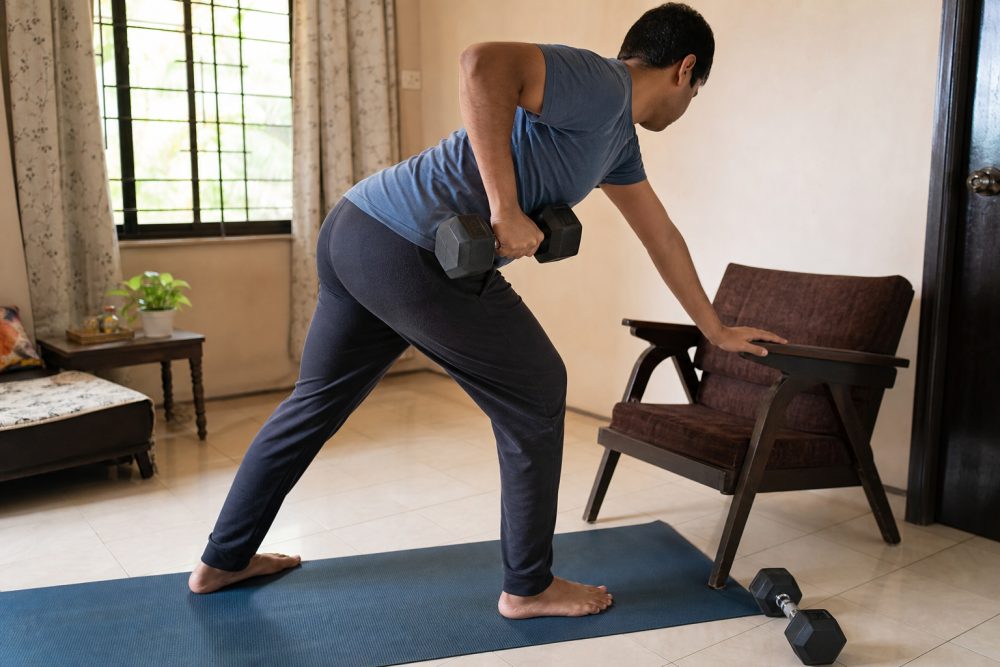
Two things protect it. Resistance training two to three times a week, and enough protein. The ICMR-NIN safe intake of 0.83 g/kg per day is a floor for a healthy adult, not a target for someone in a deficit; research in people training through energy restriction points to roughly 1.6 to 1.9 g of protein per kg of body weight for holding on to fat-free mass.
How we check your numbers at The Derm Edit, Chennai
At our Anna Nagar and Mogappair clinics, Dr Sarat Anandh, a Medical Council registered dermatologist, starts weight-loss consultations with measurement rather than assumption: body composition, waist, weekly weight averages instead of daily readings, and an honest look at four days of food logs including one weekend day. Where a medical option is appropriate, it is discussed in consultation, with its risks. Nothing here is a guarantee — bodies differ, and so do results.
Still stuck after eight honest weeks of tracking?
That is the point at which it stops being a willpower question and becomes a clinical one. Bring your food log, your weight trend and your waist measurement — we will work through the numbers with you at Anna Nagar or Mogappair, or over teledermatology.
Message us on WhatsApp for details.
Questions we are asked
Do I have to count calories forever to lose weight?
No. Most people benefit from tracking carefully for six to eight weeks, mainly to learn what their usual portions actually contain. After that, many switch to tracking only protein and weighing oil, because the awareness stays even when the logging stops.
Are online TDEE calculators accurate for Indians?
They are a starting point, not an answer. The equations behind most of them were built on Western data and can overestimate basal metabolic rate in Indians by around 10 to 12 per cent, and they also assume more energy is spent per activity than Indian studies show. Use the number for the first two weeks, then let your actual weight trend correct it.
I am eating 1,200 calories and nothing is happening. Is my thyroid the problem?
It is worth testing, and your doctor should check it. But when researchers studied people in exactly this situation, their metabolic rates were normal and the real difference was unrecorded food and overestimated exercise. Weigh your cooking oil and rice for two weeks before concluding your metabolism is at fault.
How much protein should I be eating while losing weight?
The national safe intake of about 0.83 g per kg is designed to prevent deficiency, not to protect muscle during a deficit. Research in people who resistance train while dieting supports roughly 1.6 to 1.9 g per kg of body weight. Spread it across meals — curd, eggs, dal with milk, paneer, fish, chicken, soya.
Do I need a body composition machine to track fat-free mass?
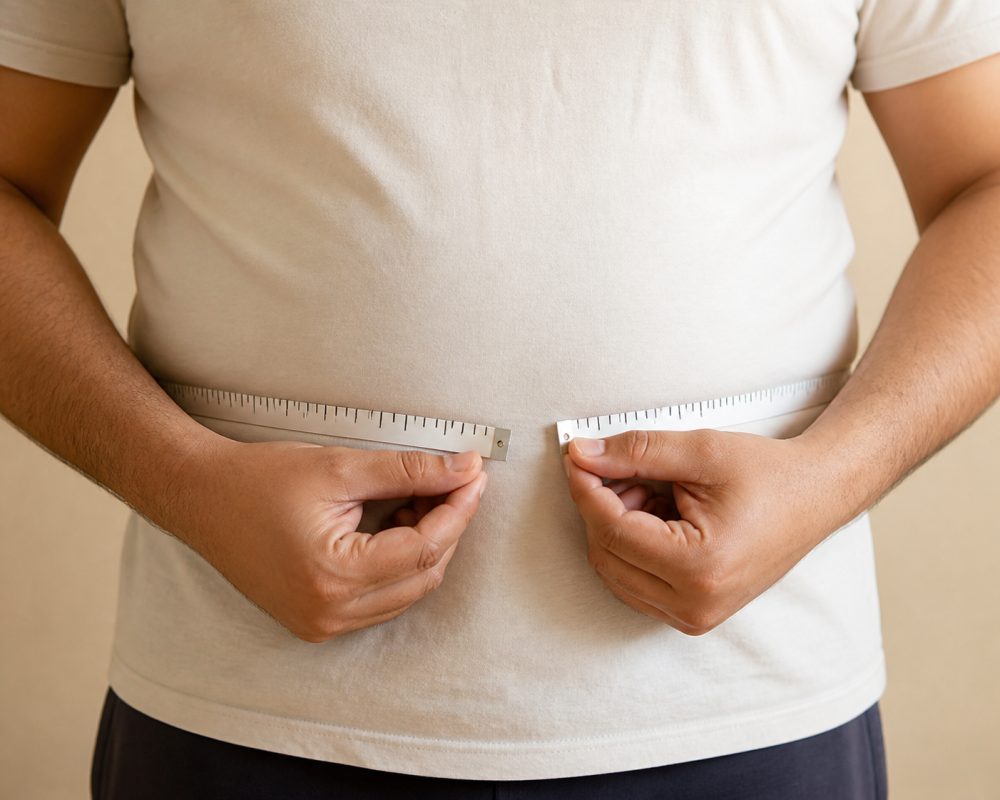
It helps, and we use it, but you can get a long way with a measuring tape and a strength log. If your waist is falling and your gym numbers are holding or rising while your weight drops slowly, you are almost certainly losing fat rather than muscle.
Sources & further reading
- ICMR-NIN Expert Group. A Brief Note on Nutrient Requirements for Indians: Recommended Dietary Allowances (RDA) and Estimated Average Requirements (EAR), 2020. https://www.nin.res.in/rdabook/brief_note.pdf
- Lichtman SW, Pisarska K, Berman ER, et al. Discrepancy between self-reported and actual caloric intake and exercise in obese subjects. New England Journal of Medicine, 1992;327:1893-98. https://pubmed.ncbi.nlm.nih.gov/1454084/
- Hall KD, Chow CC. Why is the 3500 kcal per pound weight loss rule wrong? International Journal of Obesity, 2013. https://www.nature.com/articles/ijo2013112
- Refalo MC, Trexler ET, Helms ER. Effect of dietary protein on fat-free mass in energy restricted, resistance-trained individuals: an updated systematic review with meta-regression. Strength and Conditioning Journal, 2025. https://journals.lww.com/nsca-scj/fulltext/9900/effect_of_dietary_protein_on_fat_free_mass_in.179.aspx
- Misra A, et al. Revised definition of obesity in Asian Indians living in India. Diabetes & Metabolic Syndrome: Clinical Research & Reviews, 2025. https://www.sciencedirect.com/science/article/abs/pii/S187140212400050X