Best laser hair removal in Chennai: how should you choose a machine?
The safest machine is the one whose wavelength, pulse, cooling and settings suit your skin and hair—and whose operator knows how to use it.
Book a consultation
Searching for the best laser hair removal in Chennai often leads to a list of machine names. That misses the important part. Laser hair reduction works by heating pigment in the hair follicle while protecting the surrounding skin. Skin tone, hair colour and thickness, treatment area, tan, hormonal pattern, device and operator all affect that balance.
A premium platform used with unsuitable settings can cause burns or pigment change. A well-maintained device in trained hands, with correct wavelength and cooling, is far more meaningful than a slogan about one machine working for everyone.
Wavelengths used for laser hair reduction
Long-pulsed alexandrite around 755 nm is efficient for dark hair on lighter skin but requires caution as skin melanin increases. Diode systems commonly operate around 800–810 nm and can cover a range of skin types when parameters and cooling are appropriate. Long-pulsed 1064 nm Nd:YAG interacts less with surface melanin and is widely used for darker Fitzpatrick skin types, though fine hair may respond differently.
IPL is not a laser. It uses a broad band of light and can reduce hair with appropriate filters and settings, but the label “IPL” alone does not describe safety or performance. Ask the clinic for the exact technology, wavelength and intended skin-type range.
Why pulse duration, spot size and cooling matter
Wavelength is only one setting. Pulse duration controls how quickly heat is delivered. Spot size affects penetration and coverage. Fluence, repetition rate and contact or air cooling must be adjusted for the body area, hair and skin. Recent sun exposure or tanning can change safe parameters.
A test spot may be useful for higher-risk skin or a new device. The expected immediate endpoint is usually perifollicular redness and swelling, not a visible beam, smoke or charred skin. Both patient and clinician need opaque wavelength-appropriate eye protection.
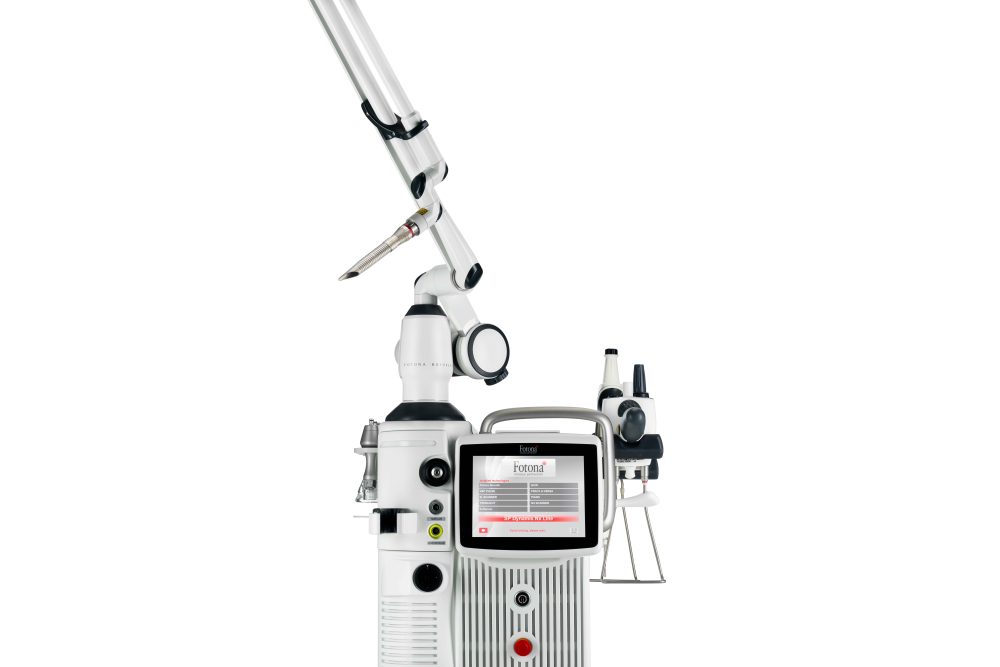
SP Dynamis NX Line and Nd:YAG hair reduction
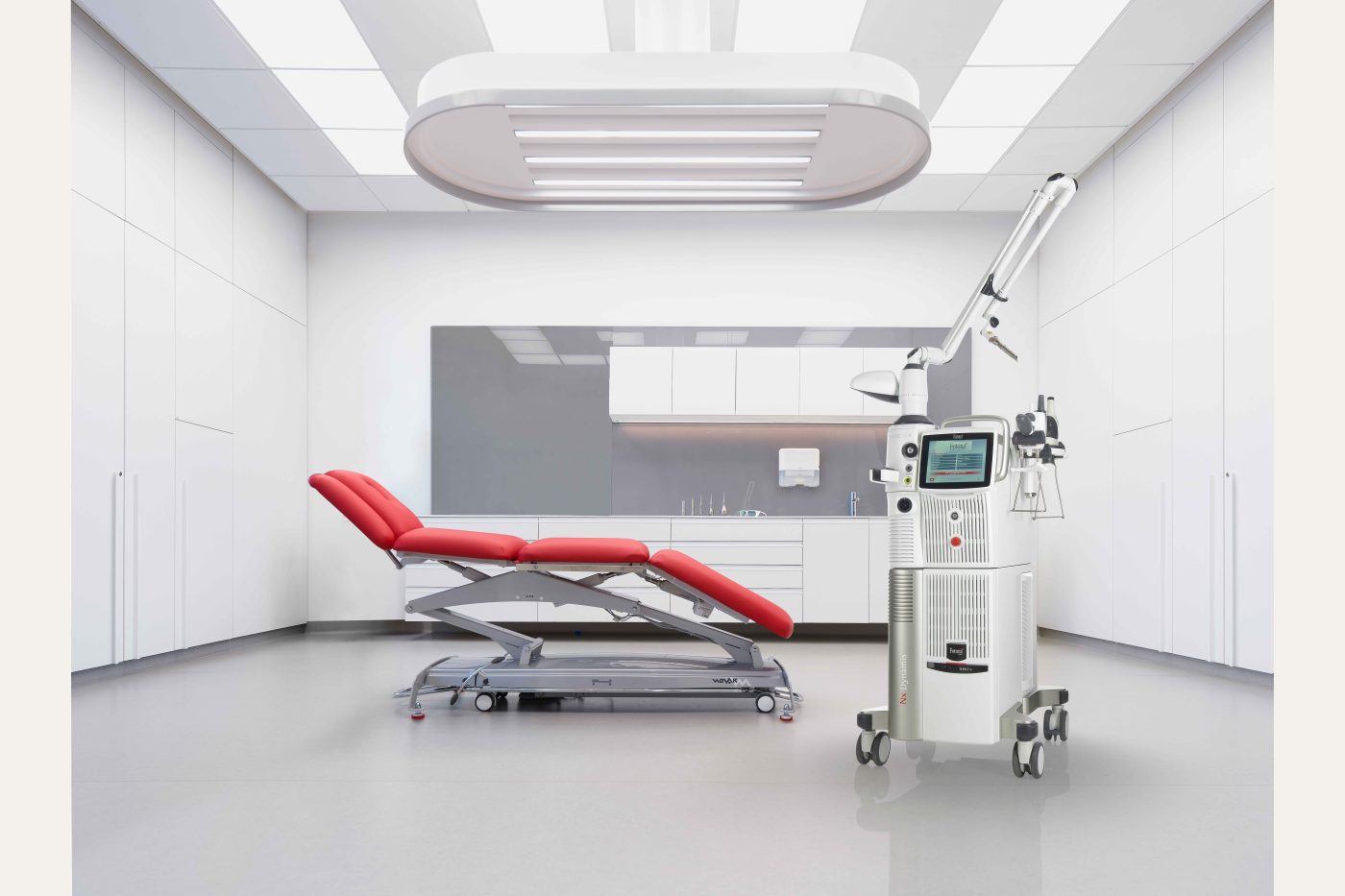
The Fotona SP Dynamis NX Line includes a long-pulsed 1064 nm Nd:YAG laser used for hair reduction and other indications. Its capability does not create the treatment plan by itself. The doctor still selects mode, handpiece, spot size, energy, pulse and cooling for the individual.
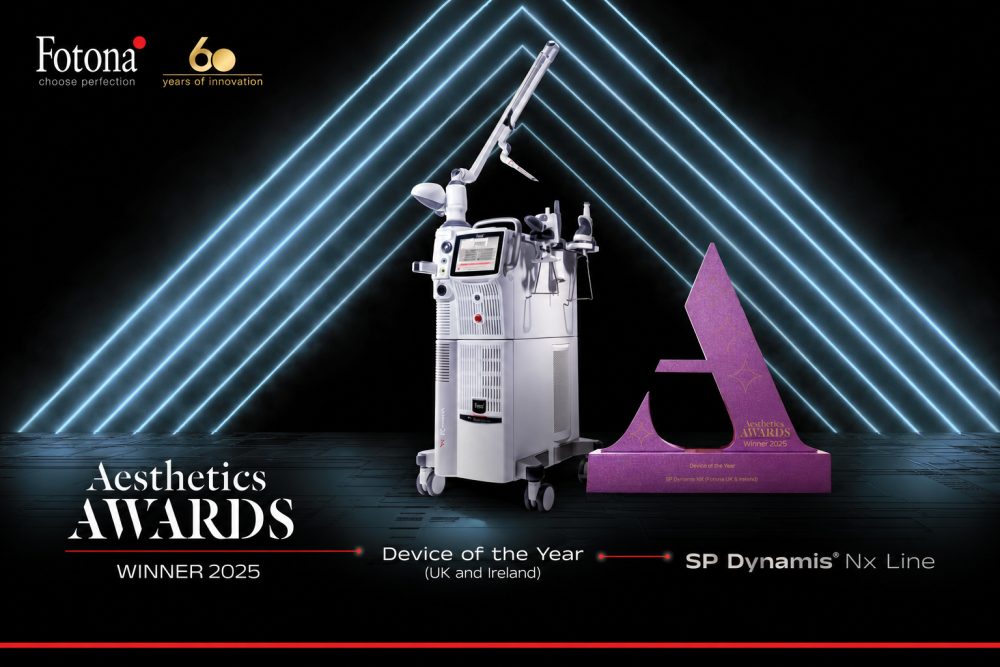
The platform received the Aesthetics Awards 2025 Device of the Year award in the UK and Ireland. That is a device-industry recognition and does not prove that one clinic or wavelength produces superior outcomes.
Hair colour, hormones and realistic expectations
Lasers target pigment, so white, grey and very light hair respond poorly. Fine facial hair can be harder to treat than coarse underarm or lower-leg hair, and unsuitable treatment may occasionally stimulate nearby fine hair. PCOS, thyroid disease and some medicines can influence regrowth and should be reviewed when the pattern suggests it.
Hair cycles mean sessions are spaced. Shaving usually preserves the follicle target between visits; waxing, threading and epilation remove it. Maintenance may be needed, especially for hormonally influenced facial hair.
How to choose a laser clinic in Chennai
Ask who evaluates skin type, who performs the session, how the device is serviced, what eye protection is used and how settings change between face and body. A clinic should document parameters and manage burns or pigment change if they occur.
The Derm Edit in Anna Nagar West Extension and Mogappair uses doctor-led protocols with the Fotona SP Dynamis NX Line. Dr. Sarat Anandh, MD DVL, is a Medical Council registered dermatologist. An assessment can explain whether Nd:YAG, another option or no laser is appropriate. Message us on WhatsApp for details.
Questions we are asked
Which laser hair removal machine is safest for Indian skin?
Long-pulsed 1064 nm Nd:YAG is commonly chosen for darker skin because it interacts less with surface melanin. Safety still depends on settings, cooling, tan and operator experience.
Is diode better than Nd:YAG for hair reduction?
Neither is universally better. Diode can work across several skin types; Nd:YAG is often favoured as skin tone deepens, while hair thickness and body area also matter.
Is IPL the same as laser hair removal?
No. IPL uses a broad band of light, while a laser uses a defined wavelength. Both require suitable filters, parameters, cooling and trained operation.
Why does facial hair need more maintenance?
Facial hair is often finer and more influenced by hormones. PCOS and other causes may continue to recruit new hairs even after a useful reduction.
How do I choose the best laser hair removal clinic in Chennai?
Look for a Medical Council registered dermatologist, wavelength-appropriate eye protection, documented settings, device maintenance and an honest discussion of hair colour, hormones and maintenance.
Sources & further reading
- Alexiades M et al. — Laser and light treatments for hair reduction in Fitzpatrick skin types IV–VI: review, 2017, https://pubmed.ncbi.nlm.nih.gov/28791605/
- Nanni CA, Alster TS — Laser-assisted hair removal and side effects across wavelengths, 1999, https://pubmed.ncbi.nlm.nih.gov/10426883/
- Haedersdal M, Wulf HC — Evidence-based review of hair-removal methods, 2006, https://pubmed.ncbi.nlm.nih.gov/16405602/
- Fotona — SP Dynamis NX Line official brochure, 2026, https://www.fotona.com/media/documents/aesthetics/112065_sp_dynamis___nx_line_brochure.pdf