Fibre for weight loss: how much helps fullness and constipation?

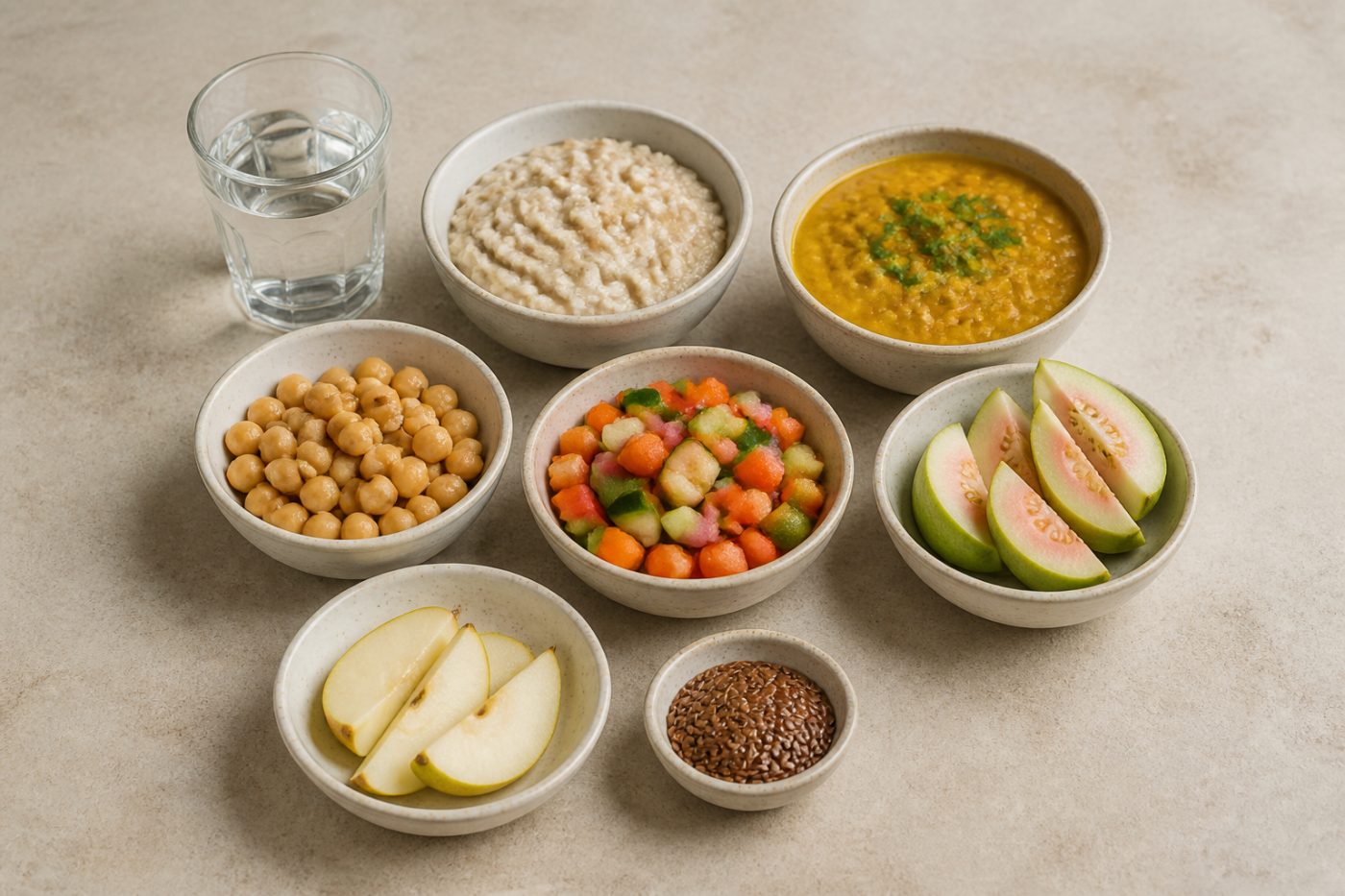
Fibre supports bowel regularity and can make meals more satisfying, but increasing it too quickly may worsen bloating or constipation.
Book a consultation
Fibre for weight loss is useful, but it is not a calorie-free shortcut. Fibre adds bulk, slows eating, supports gut microbes and can improve stool consistency. Some fibres increase fullness more reliably than others, and research shows only modest average effects on body weight. The food pattern around the fibre still matters.
Indian meals can provide fibre through vegetables, fruit, pulses, whole grains, millets, nuts and seeds. A plate of refined cereal with a token spoon of vegetables is not automatically high fibre because it looks traditional.
How much fibre do adults need?
Guidelines commonly suggest roughly 25–30 grams per day for adults, with needs varying by sex, age and energy intake. The ICMR-NIN guidelines encourage varied plant foods rather than relying on isolated powders. Instead of counting every gram, check whether most meals include vegetables or fruit, pulses and a less-refined grain where appropriate.
If your present intake is low, add one change every few days. Doubling fibre overnight can cause gas, cramps and a feeling of fullness that makes it hard to eat enough protein.
Which fibre helps fullness?
Viscous fibres such as beta-glucan, pectin and some gums form a gel and may slow stomach emptying. Reviews find that they improve appetite ratings more often than less-viscous types, but effects vary and do not guarantee lower intake. Whole foods also require chewing and bring water and micronutrients.
Oats, barley, beans, lentils, fruit and vegetables are practical sources. Nuts and seeds add fibre but are energy dense, so portions matter in a weight-loss plan.
Fibre for constipation on GLP-1 medicines
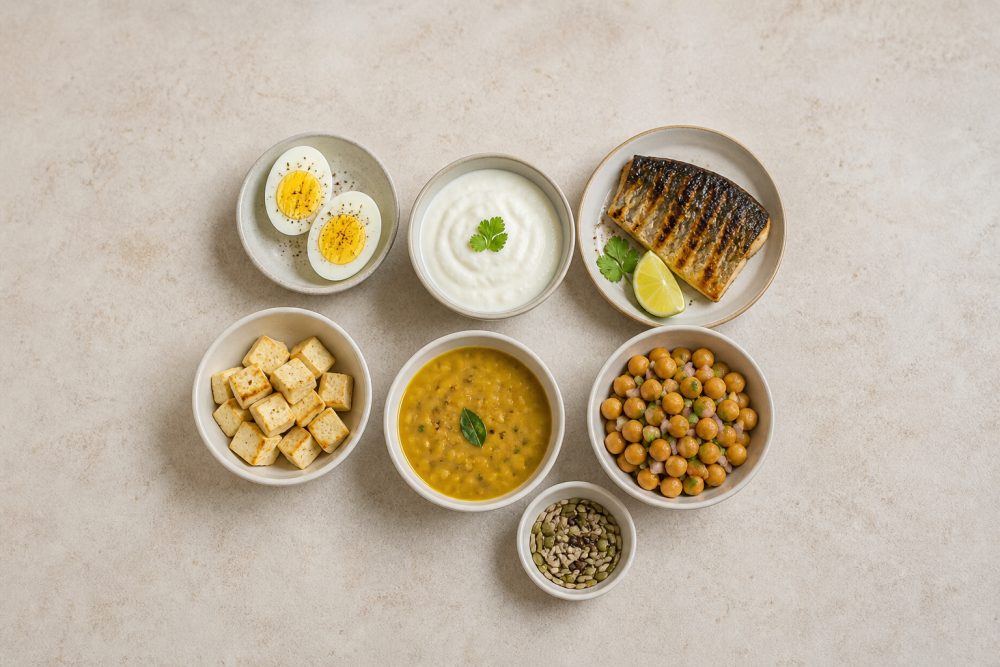
Semaglutide and tirzepatide can slow digestion and cause constipation. Fibre may help, but adding dry bran without fluid can make symptoms worse. Build fluids, walking and regular meals alongside fibre. Kiwi, prunes, vegetables, dal and oats may be easier to use than a large scoop of supplement.
Seek medical advice for severe or persistent abdominal pain, repeated vomiting, marked swelling, inability to pass gas, blood in stool or several days without a bowel movement despite self-care. Do not keep increasing fibre when obstruction is a concern.
A simple Indian fibre upgrade
At breakfast, add fruit or vegetables and choose oats, millet or a pulse-based item more often. At lunch, make vegetables and dal visible portions rather than garnishes. At dinner, keep a protein source and add cooked vegetables or salad according to tolerance. Replace juice with whole fruit when possible.
If bloating is prominent, cooked vegetables and smaller pulse portions may be easier at first. People with irritable bowel syndrome, inflammatory bowel disease, bowel narrowing or recent surgery need individual advice before a major increase.
Fibre planning at a weight-loss clinic in Chennai
A weight-loss clinic in Chennai should fit fibre advice around appetite, medicines, bowel symptoms and protein needs. The useful plan for an office day in Anna Nagar may differ from a home day in Mogappair, but it should still be repeatable.

At The Derm Edit, Dr. Sarat Anandh, MD DVL, is a Medical Council registered dermatologist providing doctor-led weight management. Bring a three-day food and bowel record so the adjustment can be specific. Message us on WhatsApp for details.
Questions we are asked
Can fibre alone make me lose weight?
Fibre may improve fullness and meal quality, but average weight effects are modest. Total intake, protein, activity, sleep and medicines still shape progress.
How fast should I increase fibre?
Add one food change every few days and increase fluid at the same time. Slow changes reduce bloating and help you see which foods suit you.
Is psyllium useful for constipation?
Psyllium can help some people when taken with adequate water. It may interact with medicine timing and is unsuitable when obstruction or swallowing difficulty is suspected.
Can too much fibre worsen constipation?
Yes, especially if the increase is sudden, fluid intake is low or there is slow gut movement. Severe pain, vomiting or inability to pass gas needs medical review.
Which Indian foods add fibre without much preparation?
Whole fruit, cooked vegetables, dal, chana, oats and small portions of seeds are practical options. Choose portions that still leave room for protein.
Sources & further reading
- ICMR-National Institute of Nutrition — Dietary Guidelines for Indians, 2024, https://www.nin.res.in/dietaryguidelines/
- Wanders AJ et al. — Effects of dietary fibre on appetite, energy intake and body weight: systematic review, 2011, https://pubmed.ncbi.nlm.nih.gov/21676152/
- Goltz SR et al. — Extracted and isolated fibres, appetite and energy intake: comprehensive review, 2022, https://pubmed.ncbi.nlm.nih.gov/36216214/
- Rao SSC et al. — AGA-ACG clinical practice guideline on chronic idiopathic constipation, 2023, https://pubmed.ncbi.nlm.nih.gov/37211380/