Walking after meals: can it support weight loss and blood sugar?

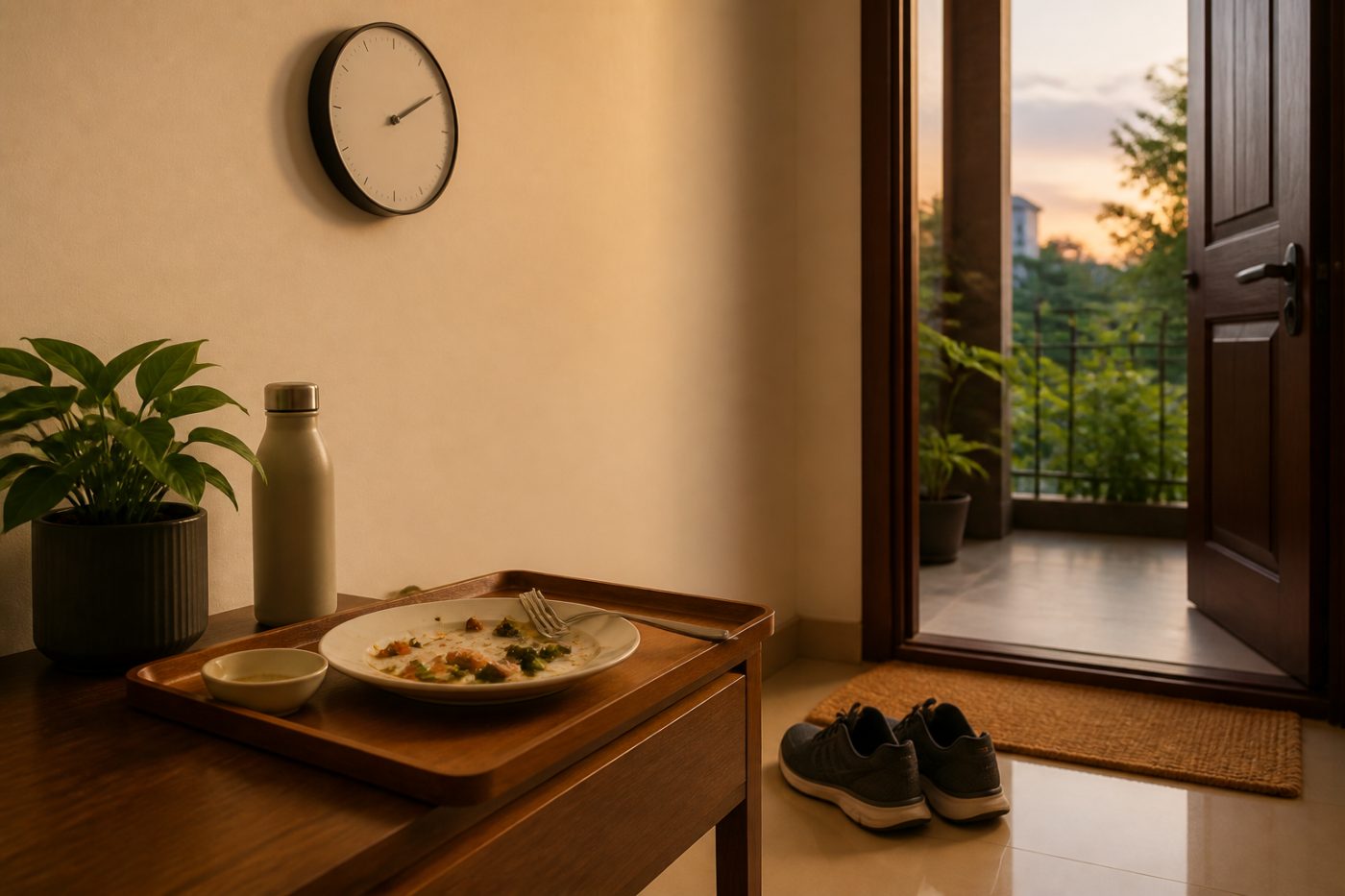
A short walk after eating can reduce the glucose rise from that meal. It is a useful habit, but it does not erase the meal or replace a broader weight-loss plan.
Book a consultation
Walking after meals for weight loss is appealing because it is simple and needs no gym. The strongest evidence is for an acute reduction in post-meal glucose, especially when activity begins reasonably soon after eating. Evidence for long-term weight loss is less direct because body weight still depends on total activity, food intake and adherence.
A ten-minute walk after two or three meals can add meaningful movement to a sedentary day. It may be easier to repeat than finding one uninterrupted hour.
What studies show about post-meal glucose
A 2023 systematic review found that exercise after a meal reduced glucose excursions more than exercise before eating or remaining inactive. Starting sooner generally produced a larger acute effect. Newer reviews of short activity breaks also find that frequent walking reduces post-meal glucose and insulin compared with prolonged sitting.
These are average results from short studies. They do not mean everyone should walk briskly immediately after a heavy meal. Reflux, abdominal discomfort, neuropathy, dizziness and heart disease may require a different pace or timing.
Can walking after meals reduce body weight?
Walking uses energy and can support a weekly activity target. However, small post-meal walks will not compensate for a consistently large calorie surplus. Their real value is that they are easy to attach to an existing cue—finishing breakfast, lunch or dinner.
Track total weekly movement, not only the post-meal ritual. Gradually increase pace, duration or hills as fitness improves. Add resistance exercise twice weekly when appropriate to protect muscle during weight loss.

How to start safely
Begin with five to ten minutes at a comfortable pace after one meal. Choose a flat, well-lit route or walk indoors during Chennai heat and rain. Wear stable footwear and carry glucose if you use insulin or medicines that can cause low blood sugar.
People with diabetes should understand their own hypoglycaemia risk. GLP-1 medicines alone have a low risk of low glucose, but combinations with insulin or sulfonylureas change that. Stop for chest pain, faintness, severe breathlessness or new palpitations and seek care.
Short walks versus one longer session
Both can fit. Short post-meal walks target long sitting and glucose peaks. A longer brisk walk may add more aerobic training and improve fitness. Combining them is reasonable if recovery and schedule allow.
Do not turn every meal into a punishment. On busy days, standing, household movement or a few corridor laps are still better than hours of unbroken sitting. Progress should feel achievable, not all-or-nothing.
Weight-loss planning in Chennai
When choosing a weight-loss clinic in Chennai, ask whether activity advice accounts for diabetes medicines, joint pain, heat and work schedule. Generic step targets can discourage people whose safe starting point is lower.
At The Derm Edit in Anna Nagar West Extension and Mogappair, doctor-led weight management reviews food, medicines, muscle preservation and daily movement together. Dr. Sarat Anandh, MD DVL, is a Medical Council registered dermatologist. Bring your current step count and medicine list. Message us on WhatsApp for details.
Questions we are asked
How long should I walk after a meal?
Five to ten minutes is a practical start, and some people build toward longer walks. Comfort, fitness, medicines and total weekly activity guide the dose.
Should I walk immediately after eating?
Studies suggest activity reasonably soon after a meal helps glucose, but a large meal or reflux may make a short delay more comfortable. Choose safe timing for your symptoms.
Can a post-meal walk prevent a blood sugar spike?
It can reduce the average rise, but it may not fully prevent it. Meal composition, diabetes and medicines still matter.
Is walking enough for weight loss?
Walking can contribute, especially when total volume grows, but nutrition and muscle-strengthening activity remain important. Weight loss varies between people.
Who should check with a doctor before brisk walking?
Seek advice if you have chest symptoms, severe breathlessness, fainting, unstable diabetes, foot ulcers, major joint pain or a long period of inactivity.
Sources & further reading
- Engeroff T et al. — Exercise before and after meals and postprandial glucose: systematic review and meta-analysis, 2023, https://pubmed.ncbi.nlm.nih.gov/36715875/
- Gale JT et al. — Activity breaks and postprandial glucose and insulin: systematic review and meta-analysis, 2026, https://pubmed.ncbi.nlm.nih.gov/42070794/
- Liu X et al. — Short-bout accumulated exercise and postprandial metabolism: systematic review and meta-analysis, 2026, https://pubmed.ncbi.nlm.nih.gov/42586449/
- World Health Organization — Guidelines on physical activity and sedentary behaviour, 2020, https://www.who.int/publications/i/item/9789240015128