GLP-1 weight-loss plateau: why progress slows and what helps

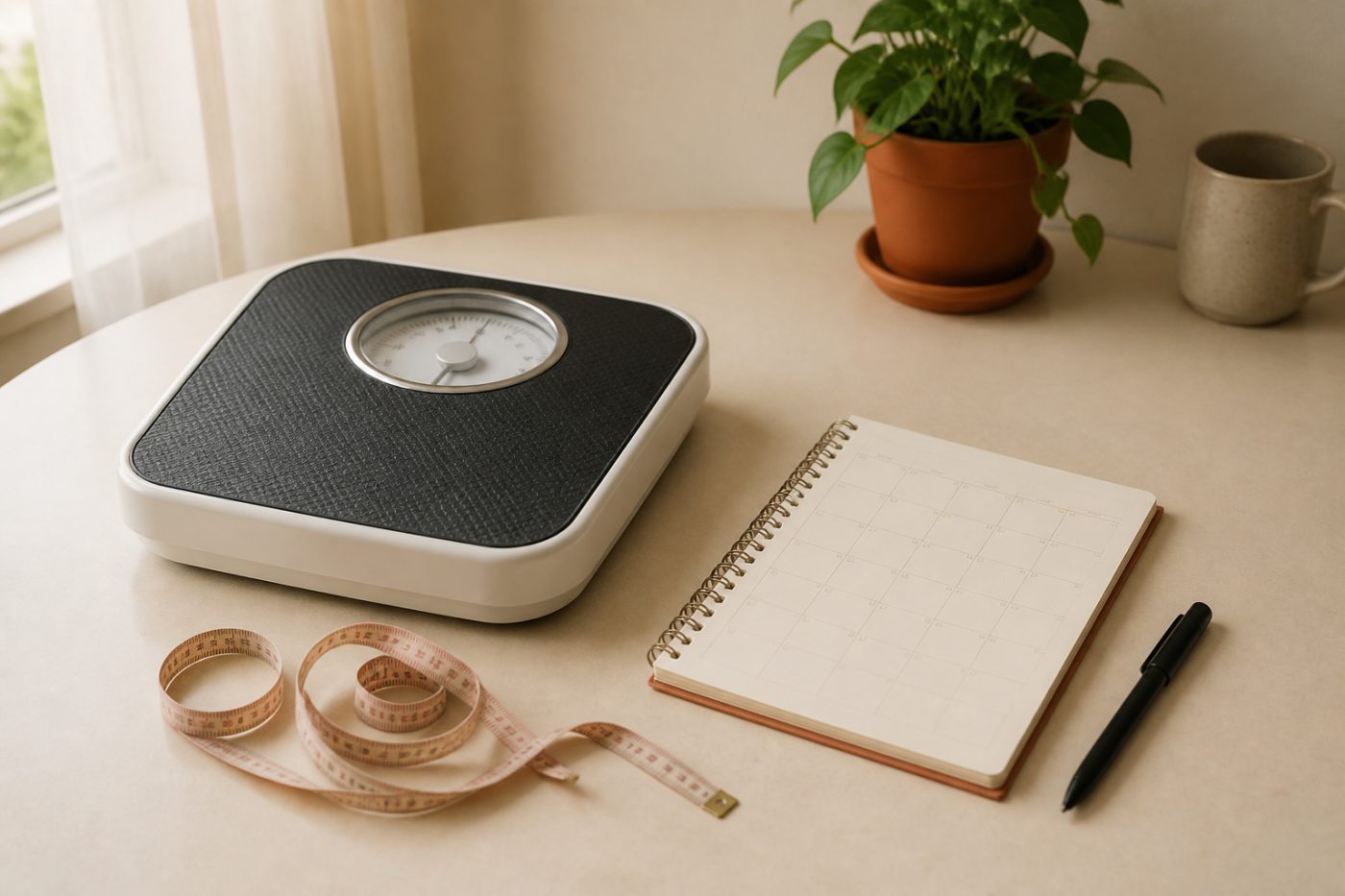
A slower month does not automatically mean your medicine has stopped working. Weight-loss plateaus are expected, and the next step is a careful review—not a rushed dose change.
Book a consultation
A GLP-1 weight-loss plateau can feel discouraging after the scale moved steadily for several months. Yet a flatter line is a normal part of long-term weight management. In major semaglutide and tirzepatide trials, average weight loss slowed over time rather than continuing at the early pace forever. Individual results varied widely.
As your body becomes lighter, it needs less energy for movement and basic functions. Appetite signals can also adapt. The habits that created a useful calorie gap at the beginning may later maintain your new weight instead. This is physiology, not a character flaw.
Is it a true GLP-1 weight-loss plateau?
One or two unchanged weigh-ins are not enough. Salt, constipation, menstrual changes, travel, poor sleep and a hard workout can shift body water. Compare weekly averages for at least four weeks, using the same scale at a similar time. Waist measurement, clothing fit, strength and energy can show progress that a single number misses.
Also check whether injections were taken on schedule and stored correctly. Nausea, reflux or constipation may have changed food choices in ways that reduce protein, fibre or activity. Never compensate for a slow week by taking an extra dose. Dose decisions belong with the prescribing doctor.
Why progress slows during medical weight loss
Early loss may include glycogen and its associated water. Later progress reflects more gradual tissue change. A smaller body burns fewer calories during daily life, while unconscious movement can fall when intake is lower. Portion sizes may also drift upward as the novelty of a plan fades.
Medicines help appetite regulation, but they do not make sleep, food quality, resistance exercise and follow-up irrelevant. Some people reach a stable response at a lower dose; others may need a medically supervised review of dose, side effects, other medicines or an alternative diagnosis.

What your doctor may review
Bring a short record of weekly weights, bowel symptoms, sleep, meals, activity and missed doses. Your doctor may review thyroid symptoms, medicines linked with weight change, fluid retention, menopause, PCOS, diabetes control or sleep apnoea when the history suggests it. Tests are chosen from the clinical picture, not ordered automatically for every plateau.
The safest nutrition reset is often simple: regular meals, a planned protein source, vegetables or fruit, enough fluid and fewer calorie-dense extras that are easy to overlook. If appetite is very low, a smaller protein-first meal can be more useful than skipping food all day and grazing at night.
Strength, cardio and muscle preservation
Resistance exercise helps protect fat-free mass during dietary weight loss. Aerobic activity supports fitness and energy expenditure. Most people do better with a mixture they can repeat than with an exhausting burst followed by inactivity. Begin at an appropriate level if you have joint pain, heart symptoms or little exercise experience.
A plateau is not the moment to slash intake aggressively. Rapid restriction can worsen weakness, constipation and muscle loss. Review sleep as well: short sleep can increase opportunities to eat and make hunger harder to manage.
Getting a plateau review in Chennai
When looking for a weight-loss clinic in Chennai, ask whether follow-up covers nutrition, side effects, muscle preservation and medication safety—not only the injection dose. A plan should be adjusted to your medical history and response.

At The Derm Edit in Anna Nagar West Extension and Mogappair, Dr. Sarat Anandh, MD DVL, is a Medical Council registered dermatologist who provides doctor-led weight management. Bring your medicine list and recent records so the consultation can separate normal slowing from a problem that needs attention. Message us on WhatsApp for details.
Questions we are asked
How long should my weight stay the same before I call it a plateau?
Daily readings vary, so compare weekly averages. If the trend has not changed for about four weeks despite consistent treatment, food and activity, arrange a review rather than changing the dose yourself.
Does a plateau mean my GLP-1 medicine has stopped working?
Not necessarily. A lighter body needs less energy, and weight curves commonly flatten over time even when appetite control remains better than before.
Should I increase my dose when weight loss slows?
Only the prescribing doctor should decide. The review should include side effects, missed doses, current intake, other medicines and whether the present dose is already giving useful benefits.
Can constipation hide weight loss on the scale?
Constipation and changes in body water can temporarily raise scale weight. Treat bowel symptoms safely and judge the trend over several weeks rather than reacting to one reading.
How do I choose a weight-loss clinic in Chennai for a plateau?
Look for doctor-led follow-up that reviews nutrition, strength, side effects and medical causes of weight change. Avoid services that promise a fixed result or automatically raise the dose.
Sources & further reading
- Garvey WT et al. — Two-year effects of semaglutide in adults with overweight or obesity: STEP 5, 2022, https://pubmed.ncbi.nlm.nih.gov/36216945/
- Wilding JPH et al. — Weight regain and cardiometabolic effects after withdrawal of semaglutide: STEP 1 extension, 2022, https://pubmed.ncbi.nlm.nih.gov/35441470/
- Jastreboff AM et al. — Tirzepatide once weekly for the treatment of obesity, 2022, https://pubmed.ncbi.nlm.nih.gov/35658024/
- Lopez P et al. — Resistance exercise during dietary weight loss in people with overweight or obesity: systematic review and meta-analysis, 2025, https://pubmed.ncbi.nlm.nih.gov/40909191/