Hair loss with GLP-1 medicines: what do we know in 2026?


Hair shedding can appear during GLP-1 treatment, but the medicine may not be the only explanation. New 2026 evidence helps separate association from cause.
Book a consultation
Hair loss with GLP-1 medicines is being reported often enough that it deserves a calm, evidence-based conversation. A 2026 meta-analysis found more reports among people using these medicines than among those receiving placebo. That does not prove the injection directly harms hair follicles. Rapid weight change, eating less because of nausea or low appetite, illness, stress and an underlying hair condition may all contribute.
Is GLP-1 hair loss real?
The newest meta-analysis combined nine interventional studies involving 4,114 GLP-1 users. The relative risk was about three times higher than with placebo, while the pooled event rate in single-arm studies was 3.9%. Relative risk can sound dramatic; the absolute figure means that roughly four in every 100 participants in those particular studies reported hair loss.
Regulatory information also recognises the signal. In adult weight-management trials, hair loss was recorded in 3% of participants using semaglutide 2.4 mg versus 1% with placebo. Tirzepatide trials listed 4% to 5% versus 1% with placebo, and its prescribing information notes that these reactions were associated with weight reduction. Studies used different methods, and many did not identify the exact type of hair loss, so these numbers need context.
Why rapid weight loss may trigger shedding
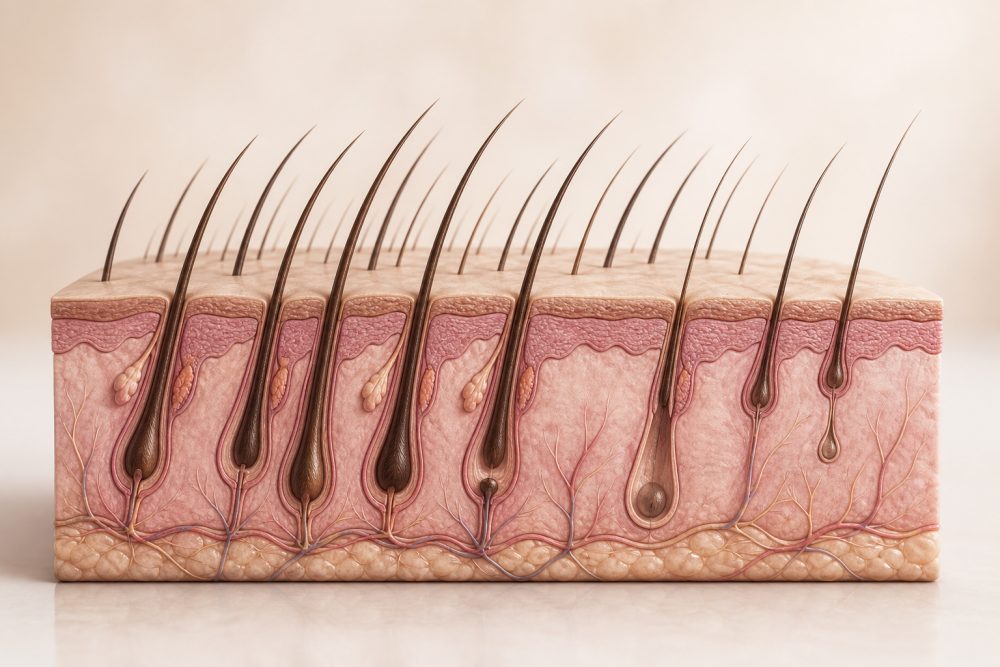
Telogen effluvium is a common explanation for diffuse shedding after a physical or nutritional stress. More follicles shift into a resting phase, so the extra hair may become visible weeks to months after the trigger rather than on the day a dose changes. Calorie restriction, inadequate protein, iron or other nutritional shortfalls, illness and major stress can all play a role.
This pattern usually affects the scalp more evenly instead of creating one sharply defined bald patch. However, androgenetic hair loss, thyroid disease, anaemia, polycystic ovary syndrome and scalp inflammation can overlap with it. A timeline of dose changes, weight change, appetite, vomiting or diarrhoea, illness and shedding is therefore more useful than blaming one factor.
What to check before blaming the medicine
A dermatologist may ask when shedding began, how quickly weight changed, whether periods are heavy or irregular, and whether meals have become very small. Scalp examination and trichoscopy can help separate diffuse shedding from patterned loss, alopecia areata or inflammatory disease. Blood tests such as a blood count, ferritin or thyroid testing are selected from the history and examination; everyone does not need the same panel.
Seek earlier review for a smooth bald patch, scalp pain, heavy scale, broken hairs, eyebrow or eyelash loss, visible scarring, or sudden severe shedding. Fatigue, palpitations, marked weakness or other symptoms also deserve medical assessment. Do not change or stop a prescribed GLP-1 medicine based only on an article: contact the clinician managing it, especially if nausea, vomiting or poor intake is ongoing.
Protein, supplements and GLP-1 hair loss
Protein intake can quietly fall when appetite drops. Indian meals can include dal, chana, rajma, paneer, curd, eggs, tofu, fish or chicken, spread across the day according to medical needs. Someone with kidney disease, pregnancy, an eating disorder or another nutrition concern needs an individual plan rather than a generic target.

Iron, vitamin B12, vitamin D, zinc and other nutrients may be checked when the history suggests a risk. Taking large supplement doses without showing a deficiency can add cost, side effects and confusion without addressing the reason for shedding. A powder or tablet cannot replace adequate meals or a diagnosis.
When to see a hair loss dermatologist in Chennai
If shedding continues, worries you, or is changing the visible density of your hair, arrange a medical review. Patients searching for a hair loss dermatologist in Chennai, Anna Nagar or Mogappair should look for a Medical Council registered dermatologist who examines the scalp, explains the likely pattern and coordinates with the weight-loss clinician.
People often ask how to choose the best hair loss clinic in Chennai. A sensible clinic should begin with diagnosis, discuss what the evidence can and cannot show, and avoid selling a procedure before the cause is assessed. At The Derm Edit, hair and doctor-led weight-loss care can be reviewed together, with a plan shaped around your medicines, food intake, health history and scalp findings.
If you are noticing new shedding while taking semaglutide, tirzepatide or another GLP-1 medicine, we can assess the pattern and coordinate next steps with your prescribing clinician. Message us on WhatsApp for details.
Questions we are asked
Do semaglutide and tirzepatide cause hair loss?
Trials and 2026 reviews show an association between GLP-1 medicines and reported hair loss, especially during weight management. They do not yet prove that the medicine directly damages follicles, because rapid weight change and reduced intake may contribute.
Could my shedding be telogen effluvium after weight loss?
It could be if shedding is diffuse and began weeks to months after rapid weight change, illness or reduced intake. A scalp examination is important because patterned hair loss, alopecia areata and scalp disease can look different or occur at the same time.
Should I stop my GLP-1 medicine if my hair is shedding?
Do not stop or alter a prescribed medicine based only on hair shedding or an online article. Speak with the clinician who prescribed it and a dermatologist so dose tolerance, nutrition, weight-loss pace and scalp findings can be reviewed together.
Will protein, biotin or iron stop GLP-1 hair loss?
Adequate protein supports nutrition, but one food or supplement cannot address every cause of shedding. Iron and other supplements are most useful when assessment shows a need; unnecessary high doses can cause harm or delay the right diagnosis.
How do I choose the best hair loss clinic in Chennai while on a GLP-1?
Look for a clinic led by a Medical Council registered dermatologist who examines the scalp and coordinates with your weight-loss prescriber. In Anna Nagar or Mogappair, ask whether the plan starts with diagnosis and nutrition review before any procedure is suggested.
Sources & further reading
- Cheng Y-C, Chang C-H — Glucagon-like peptide-1 receptor agonists and hair loss: A systematic review and meta-analysis, 2026 https://pubmed.ncbi.nlm.nih.gov/42155605/
- Branyiczky A et al. — Effects of GLP-1 Receptor Agonists on Hair Loss and Regrowth: A Systematic Review, 2026 https://pubmed.ncbi.nlm.nih.gov/41174840/
- US Food and Drug Administration — Zepbound (tirzepatide) Prescribing Information, 2026 https://www.accessdata.fda.gov/drugsatfda_docs/label/2026/217806s042lbl.pdf
- US Food and Drug Administration — Wegovy (semaglutide) Prescribing Information, 2025 https://www.accessdata.fda.gov/drugsatfda_docs/label/2025/215256s026lbl.pdf
- Almohanna HM et al. — Telogen Effluvium: A Review of the Literature, 2020 https://pmc.ncbi.nlm.nih.gov/articles/PMC7320655/